

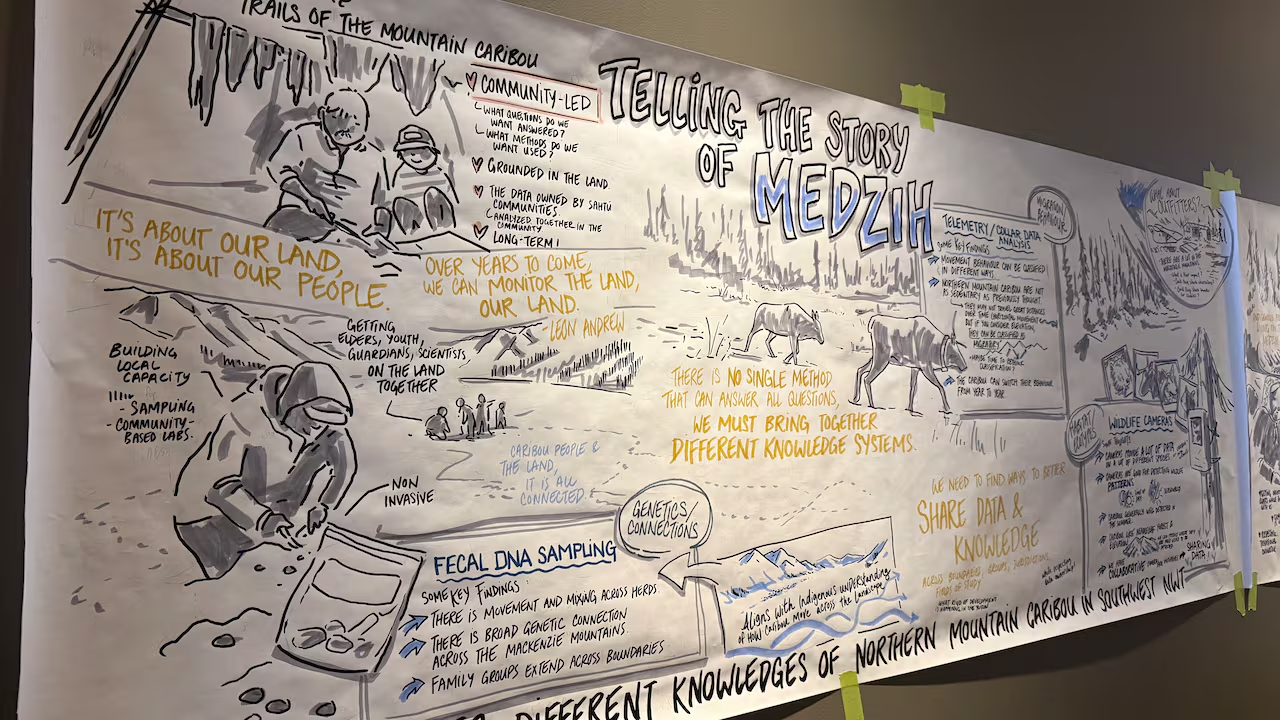
Experts discuss how to help struggling species amid climate and industry impact
June 19, 2026 from CBC News – click here for the full article
Nearly 400 leaders and caribou experts from around the circumpolar world gathered in Yellowknife for the 20th North American Caribou Conference this week.
Indigenous leaders, harvesters, conservationists and researchers from Indigenous communities, universities, co-management boards and government agencies convened to learn from each other about caribou.
At the centre of the conversations was Indigenous knowledge.
“The conference itself has really been transforming from [a] science focus to [a] much more interdisciplinary, incorporating many kinds of worldviews and ways of knowing about caribou,” said Kathy Unger, conference co-chair and a caribou biologist with the Northwest Territories Department of Environment and Climate Change.
Delegates here say Indigenous communities were once passive recipients of the information collected and decisions made about the wildlife they have relationships with, but now they’re active leaders defining conservation priorities and solutions.
Indigenous knowledge holders, harvesters and Elders are respected for having valuable knowledge critical to making locally-relevant and culturally-appropriate decisions.
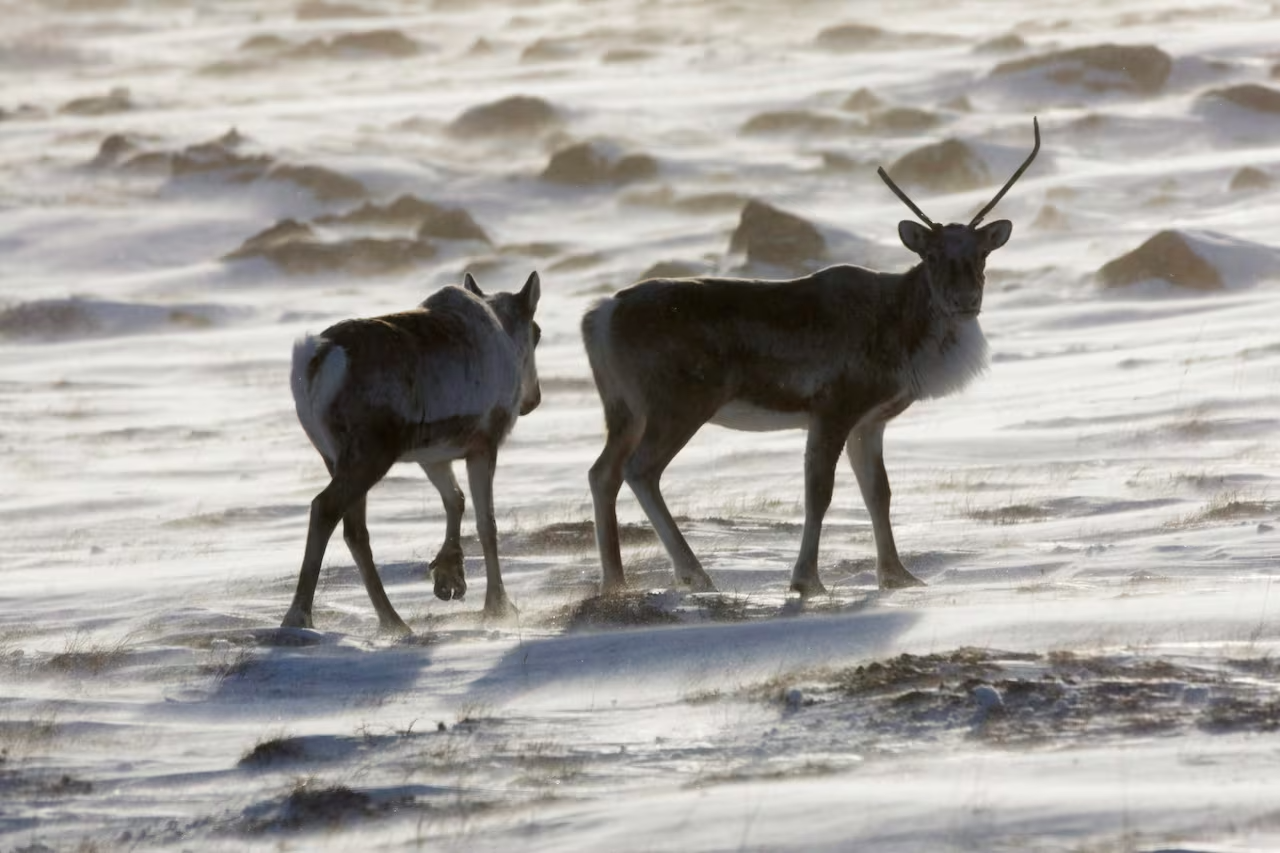
Wild caribou roam the Nunavut tundra in a 2009 file image. Delegates at a major caribou conference in Yellowknife this week say Indigenous knowledge is crucial to helping the species recover from pressure caused by climate change and industry. (Nathan Denette/CP)
Sayisi Dene hunter and hide tanner, Angela Code, appreciated being among so many others who care about caribou. During her presentation, she shared a history that underscored the devastating consequences of ignoring Indigenous communities and their knowledge.
Code’s community, including her mother as a little girl, was forced to relocate from Little Duck, M.B. to Churchill in the 1950s based on a survey that incorrectly concluded the caribou population was in crisis and the Sayisi Dene were a threat to the population.
“In some ways, traditional knowledge is the real knowledge,” said Eliezer Gurarie, a professor of environmental science and forestry at State University of New York. He said people on the land observe relationships and changes that scientific tools can’t always fully capture.
Gurarie spoke to the conference about caribou migration and what it can tell us about the species with Cheryl Ann Johnson, an ecologist with Environment and Climate Change Canada. For both, conversations and observations from Indigenous co-management partners that identify questions that guide scientific research.
In her work on the Peary Caribou, Johnson said local Inuit hold generations of observations about migration routes, calving grounds, sea ice crossings, and changing environmental conditions.
These co-management conversations that combine all knowledges also invite a broader understanding of conservation that’s reflected in management decisions and what researchers consider significant, Johnson said. Goals have evolved from population target numbers into supporting the ecological systems that sustain caribou and the cultural identities sustained by them.
“It was the Inuit partners that specified it was important to not only have healthy populations as a goal populations that were large enough to withstand harvest … and the last thing was making sure that they were free to move,” she said.
Industry and climate impacts on caribou
These conversations are unfolding at a time of growing concern about climate change and major infrastructure projects planned across the North.
Gurarie said a major issue for people attending the conferences is the potential construction of a proposed all-season corridor connecting Yellowknife to the Arctic coast.
“The all season road,” Gurarie said, “is going to have a really huge impact on the connectivity of [caribou] populations and the persistence of their ability to move.”
Dene and Métis Elder Earl Evans, chair of the Beverly and Qamanirjuaq Management Board, said co-management boards and Indigenous communities are increasingly focused on mitigating the impacts of industrial development and climate disasters on caribou, and combining Indigenous knowledge with Western science makes for better solutions.
Earl Evans of Fort Smith is saddened by the loss of his two cabins. He enjoys being on the land and said the cabins were good places to store necessary supplies on the trail, and take shelter while traveling.
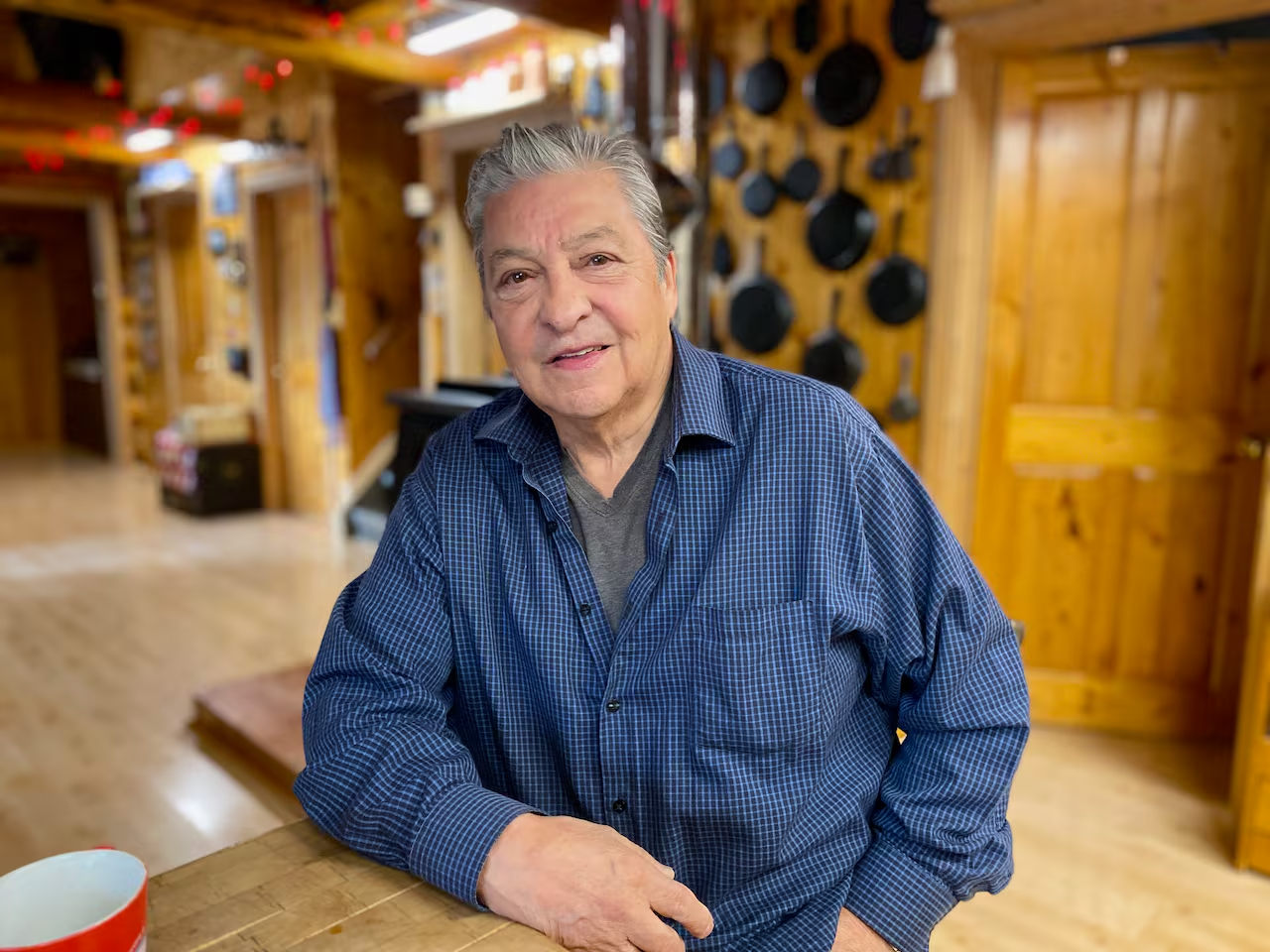
Earl Evans is Métis from the South Slave in the N.W.T. and the chair of the Beverly and Qamanirjuaq Management Board. (Carla Ulrich/CBC)
“What we’re trying to do is look at the whole big picture,” he said. “We gotta work as a cohesive unit with these people to try to mitigate factors that are influencing the decline of caribou.”
“Caribou is a sinew of the North that brings all the people together as one unit. We’re one big large family … striving for the same thing: to have a healthy habitat, healthy caribou and healthy people. And caribou is the middle of it. They’re the heart of it.”